Warm summer days are perfect for long walks, beach trips and time in the garden. Dogs cannot cool down as easily as people, though. They mainly lose heat by panting, so on hot days they can overheat faster than you might expect. With a little planning, you can make sure your dog enjoys the summer safely.
Plan walks around the heat
- Walk early or late. The coolest parts of the day are usually early in the morning and in the evening. Midday walks are best kept short on hot days.
- Check the ground. Pavements, sand and artificial grass can get very hot. Press the back of your hand on the surface for a few seconds. If it is too hot for you, it is too hot for your dog’s paws.
- Choose shady routes. Woodland paths and parks with trees are more comfortable than open streets.
- Take it easy. Skip long runs, intense games of fetch and heavy exercise in the heat. A gentle sniff-around walk still gives your dog plenty of stimulation.
Shade, water and a cool place to rest
At home and in the garden, make sure your dog always has:
- Fresh water. Keep bowls topped up in several places, and bring a travel bottle and bowl on walks.
- Shade. Trees, a parasol or a covered area give your dog somewhere to escape the sun.
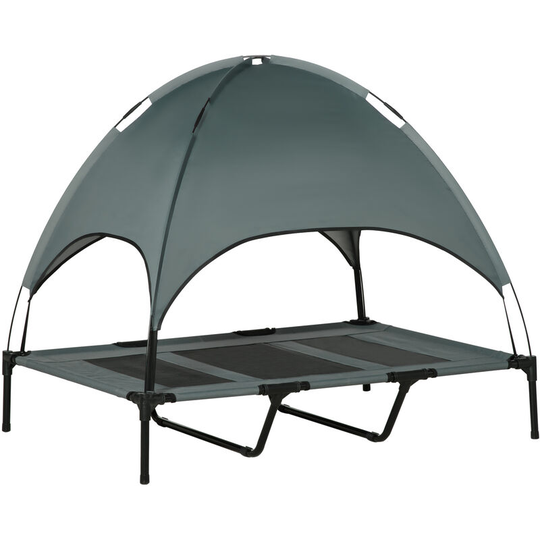
- A cool place to lie down. Raised beds let air flow underneath, and a shaded design such as this elevated dog bed with canopy works well outdoors. Indoors, a gel cooling mat gives your dog a cooler surface to stretch out on.
Some dogs enjoy a shallow paddling pool or gentle play with a garden hose. Frozen treats made from dog-safe ingredients can also help, but give them in moderation.
Never leave a dog in a hot car
Cars heat up very quickly in warm weather, even when the sky is cloudy or the windows are slightly open. Never leave your dog alone in a car on a warm day, not even for a few minutes. On longer journeys, plan regular stops for water and fresh air, and use sunshades on the windows.
Know the warning signs
Some dogs are more at risk in hot weather, including flat-faced breeds, older dogs, puppies, overweight dogs and those with thick coats or health conditions. Keep a close eye on them in particular.
Signs that your dog may be struggling with the heat include:
- Heavy panting or difficulty breathing
- Drooling more than usual
- Weakness, stumbling or seeming confused
- Vomiting or diarrhoea
- Collapse
If you notice any of these signs, move your dog to a cool, shaded place, offer small amounts of water and contact your vet straight away. Overheating can be serious, and your vet can advise you on what to do.
Grooming and sun care
Regular brushing removes loose undercoat and helps air move through the fur. Ask your groomer or vet before clipping a double-coated breed very short, as their coat also offers some protection. Dogs with pale or thin fur, especially on the nose and ears, can be sensitive to strong sun, so ask your vet about pet-safe sun protection.
With sensible routines and the right equipment, your dog can enjoy the long summer days as much as you do. You can find beds, bowls and other warm-weather essentials in our dog section.