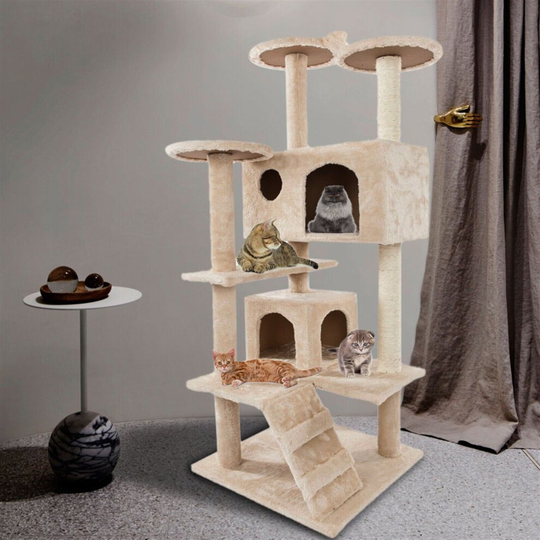
Cats love to climb, scratch and watch the world from above. A good cat tree gives them a place to do all three, and it can save your sofa and curtains at the same time. Not every cat tree is a success, though. Some end up ignored in a corner while the cat carries on scratching the furniture. Here is how to choose one that suits your cat and your home.
Why cats need to climb and scratch
Scratching is natural behaviour for cats. It helps them keep their claws in good condition, stretch their muscles and leave their scent. Climbing gives them exercise and a safe place to rest where they can keep an eye on what is happening.
Indoor cats in particular benefit from vertical space, as it makes a home feel bigger and more interesting to them. In homes with more than one cat, extra levels can also help reduce tension by giving each cat its own spot.
What to look for
Stability. This is the most important point. A cat tree that wobbles when your cat jumps on it will quickly be avoided. Look for a wide, heavy base, and for taller trees, check whether they come with a wall fixing.
Height. Many cats love the highest point in the room. Taller trees, like this 130cm cat tree with scratching posts, suit confident climbers. Kittens and older cats may prefer a lower design with smaller steps between platforms.
Scratching surfaces. Sisal rope is a popular choice because it is rough and durable. Check that the posts are tall enough for your cat to stretch out fully when scratching.
Platforms and hideaways. Look for perches that are large enough for your cat to lie down on comfortably. Enclosed condos are good for cats that like to hide, while open platforms suit cats who want a view.
Materials and care. Removable, washable cushions make cleaning easier. Over time, sisal posts wear out, so it helps if they can be replaced.
Size it for your cat
A tree that works for a small young cat may not suit a large adult. Bigger cats need wider platforms, sturdier posts and more space between levels. If you have several cats, choose a tree with enough perches for each one, or consider two smaller trees in different rooms.
Where to put it
Placement makes a big difference to whether a cat tree gets used.
- Near a window. Cats enjoy watching birds and people outside.
- In the main living area. Cats like to be near their people, so a tree tucked away in a spare room may be ignored.
- Close to the furniture they scratch. Placing the tree next to a favourite scratching spot gives them a better option right where they want it.
- Away from noisy appliances such as washing machines.
Encouraging your cat to use it
Some cats take to a new tree immediately, while others need a little time.
- Rub the tree with a blanket your cat sleeps on, so it smells familiar.
- Place a few treats or a favourite toy on the platforms.
- Play with a wand toy around the tree to encourage climbing.
- Praise your cat when they scratch the tree instead of the furniture.
- Be patient, and never force your cat onto it.
Once your cat has claimed it, a cat tree often becomes their favourite spot in the house. Browse our full range of cat trees and scratching posts to find one that fits your space.