Cold, wet and windy weather is hard on small pets that live outdoors. Rabbits and guinea pigs can cope with cooler temperatures if they are well prepared, but damp, draughts and frozen water bottles quickly become a problem. A few changes before the worst of the winter arrives will help keep them healthy and comfortable.
Check the hutch before the cold arrives
The hutch is your pet’s main shelter, so start there. Look at it closely on a dry day.
- Roof and walls. Check for leaks, cracks or rotten wood. A waterproof roof that overhangs the front helps keep rain out.
- Position. Move the hutch to a sheltered spot out of the prevailing wind, ideally against a wall or fence. Raising it off the ground on legs or bricks keeps the floor away from damp grass.
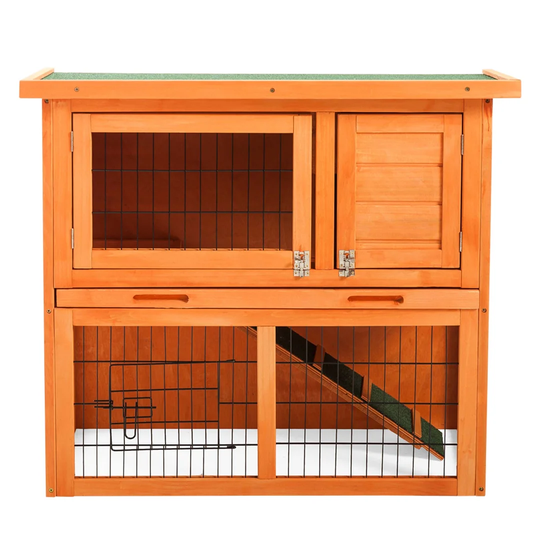
- Draughts. Make sure there is a fully enclosed sleeping area. Many owners find a two-level design, such as this two-tier wooden rabbit and guinea pig hutch, useful because it offers a separate sleeping compartment.
- Covers. A fitted hutch cover helps block wind and rain at night. Always leave a gap for fresh air, as good ventilation is still important.
Bedding that keeps them warm and dry
Warm, dry bedding is one of the simplest ways to help small pets through winter.
- Add a thick layer of clean, dust-extracted straw or hay in the sleeping area. Straw is good for insulation, and hay can also be eaten.
- Check bedding every day and replace any damp or dirty patches straight away. Wet bedding loses its warmth and can lead to health problems.
- Give your pets enough bedding to burrow into, so they can build their own warm nest.
Food and water in cold weather
Pets may use more energy staying warm in winter, so keep an eye on their diet.
- Make sure they always have plenty of fresh hay, which should make up most of their diet.
- Keep offering fresh greens and their usual pellets, and avoid sudden changes in diet.
- Check water bottles and bowls several times a day. Water can freeze overnight, so it helps to have a spare bottle you can swap in, and an insulated bottle cover can slow freezing.
Guinea pigs need a source of vitamin C in their diet all year round. If you are unsure whether your pet’s food covers this, ask your vet.
Exercise, company and health checks
Rabbits and guinea pigs still need space to move in winter. Let them use their run during the day when the weather is dry, and make sure it has a covered area for shelter.
They are also social animals, and being kept with a suitable companion helps them keep each other warm and less stressed.
While you are handling them, do a quick health check:
- Are they eating, drinking and producing droppings as usual?
- Is their fur dry and clean, especially around the bottom?
- Are they active and alert?
If anything seems different, or your pet stops eating, contact your vet promptly. Small animals can become unwell quickly, and early advice makes a difference.
Should you bring them indoors?
In very cold weather, some owners move hutches into a shed or an unused garage. If you do, make sure the space is light, well ventilated and free from car fumes, and that your pets still get time to exercise. Another option is to bring them inside the house, as long as the room is safe, quiet and not too warm compared with outdoors.
For more winter essentials such as bedding, hay feeders and cosy hideouts, take a look at our small pets section.